Image 1 of 1
Stanchions
Stanchions
A stanchion is a vertical support post used to guide, protect, or secure people, vehicles, merchandise, or structures. Common across retail, hospitality, aviation, events, construction, and industrial settings, stanchions provide both functional control and, when chosen carefully, a polished aesthetic.
Types and common uses
Crowd-control stanchions: Portable posts with retractable belts, ropes, or chains used to form queues, direct pedestrian flow, and protect exhibits. Common in airports, museums, banks, and event venues.
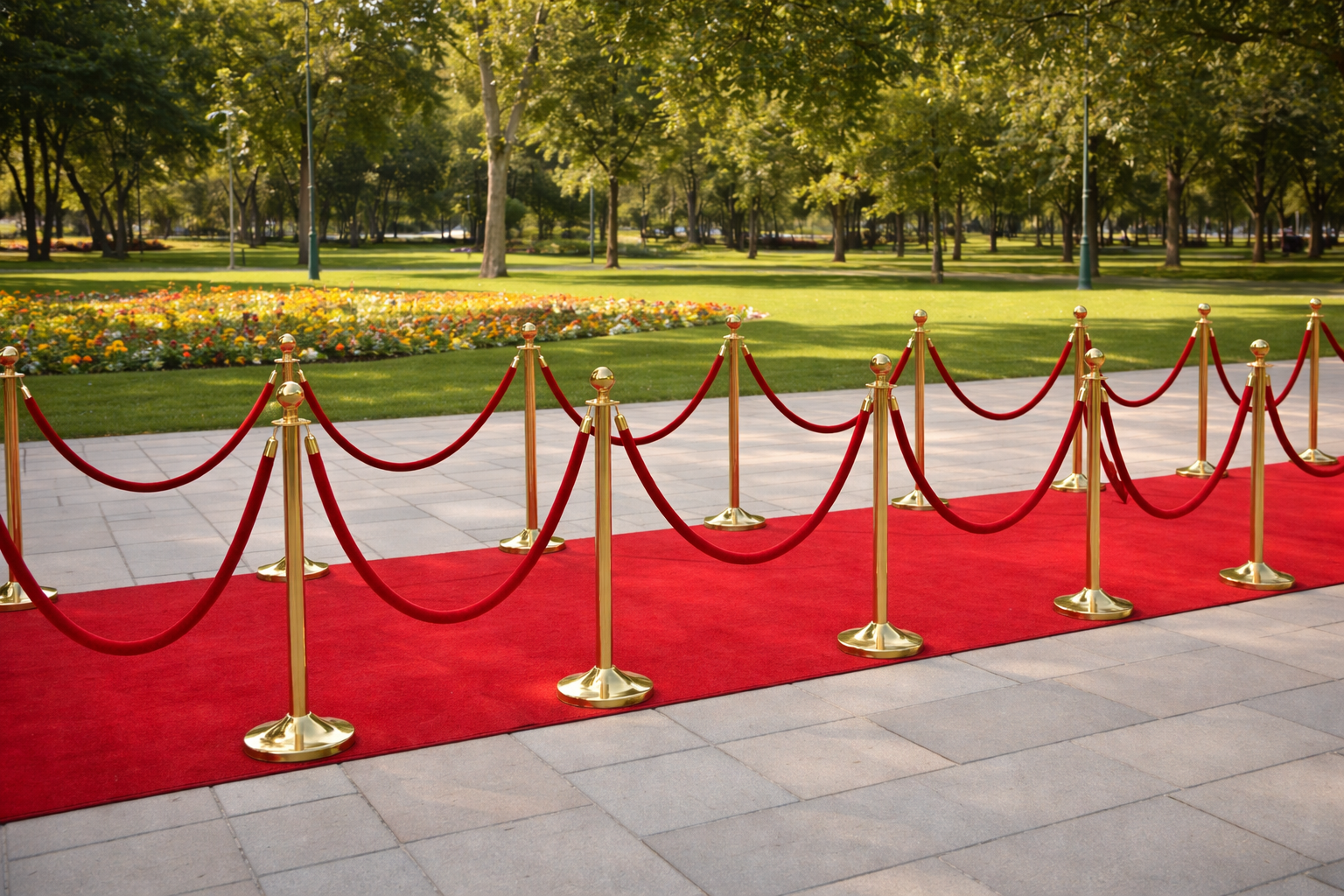
Post-and-rope stanchions: Decorative posts with velvet or braided ropes; favored in hospitality, galleries, and red-carpet arrivals for an upscale look.
Fixed stanchions: Permanently installed posts for barriers, railings, or bollard-style protection around entrances, walkways, and machinery.
Vehicle/boat stanchions: Heavy-duty stainless-steel or aluminum posts used on docks, boats, and vehicle ramps to secure lines or provide handholds.
Welding/pipe stanchions and construction stanchions: Structural supports used on scaffolding, forms, and temporary barriers at work sites.
Safety stanchions: Designed with high-visibility colors, reflective strips, or integrated signage to warn, reroute, or protect workers and the public.
Materials and finishes
Stainless steel: Durable, corrosion-resistant, and suitable for both indoor and outdoor use; often brushed or polished for a modern look.
Brass and bronze: Traditional, warm-toned metals used for upscale interiors and heritage sites.
Powder-coated steel or aluminum: Offers color options and increased weather resistance; common in industrial or outdoor settings.
Plastic and polymer: Lightweight, affordable, and weatherproof—frequently used for temporary crowd-control or construction stanchions.
Wood: Less common but used for specific design aesthetics in hospitality or themed environments.
Design considerations
Stability and base weight: Choose a base size and weight appropriate for wind conditions, foot traffic, and the length/weight of attached ropes or belts.
Mobility vs permanence: Retractable-belt and lightweight stanchions are ideal for flexible layouts; fixed or bolted stanchions are better for secure, long-term installations.
Visibility and safety: For hazard areas or construction sites, use high-visibility colors, reflective elements, and clear signage.
Durability and maintenance: Select corrosion-resistant materials for outdoors or maritime use; consider replaceable belts and rope hardware for heavy-use locations.
Aesthetics: Match metal finish, post diameter, and rope/belt style to the venue—sleek stainless posts and black belts for modern spaces; brass posts and velvet ropes for formal settings.
Accessories and features
Retractable belts: Available in various colors, lengths, and with printed messaging; offer quick setup and compact storage.
Connectors and hooks: Snap hooks, magnetic connectors, and weighted or fixed bases allow for different configurations.
Sign holders and topper designs: Signs, directional arrows, or logo toppers can be integrated for branding or wayfinding.
Anti-trip bases: Low-profile or tapered bases reduce trip hazards in high-traffic areas.
Weatherproofing and anti-corrosion coatings: Important for outdoor and maritime installations.
Specification tips for procurement
Define intended use: indoor vs outdoor, temporary vs permanent, pedestrian vs vehicle-adjacent.
Specify environmental exposure: salt air, heavy rain, extreme temperatures, or chemical exposure.
Provide flow requirements: expected queue length, spacing, and peak throughput.
Include branding and aesthetic guidelines: finishes, rope materials, and signage placement.
Consider lifecycle cost: initial purchase price, maintenance, replacement belts/ropes, and storage needs.
Maintenance best practices
Inspect regularly for loose fittings, worn belts/ropes, and corrosion.
Clean metal finishes with appropriate non-abrasive cleaners; polish where needed.
Replace belts and ropes on visible fraying or malfunction.
Store removable stanchions upright and dry to prolong life.
Selecting the right stanchion balances function, safety, durability, and appearance. Match the product to your operational needs and environment to create organized, safe, and attractive spaces.
Stanchions
A stanchion is a vertical support post used to guide, protect, or secure people, vehicles, merchandise, or structures. Common across retail, hospitality, aviation, events, construction, and industrial settings, stanchions provide both functional control and, when chosen carefully, a polished aesthetic.
Types and common uses
Crowd-control stanchions: Portable posts with retractable belts, ropes, or chains used to form queues, direct pedestrian flow, and protect exhibits. Common in airports, museums, banks, and event venues.
Post-and-rope stanchions: Decorative posts with velvet or braided ropes; favored in hospitality, galleries, and red-carpet arrivals for an upscale look.
Fixed stanchions: Permanently installed posts for barriers, railings, or bollard-style protection around entrances, walkways, and machinery.
Vehicle/boat stanchions: Heavy-duty stainless-steel or aluminum posts used on docks, boats, and vehicle ramps to secure lines or provide handholds.
Welding/pipe stanchions and construction stanchions: Structural supports used on scaffolding, forms, and temporary barriers at work sites.
Safety stanchions: Designed with high-visibility colors, reflective strips, or integrated signage to warn, reroute, or protect workers and the public.
Materials and finishes
Stainless steel: Durable, corrosion-resistant, and suitable for both indoor and outdoor use; often brushed or polished for a modern look.
Brass and bronze: Traditional, warm-toned metals used for upscale interiors and heritage sites.
Powder-coated steel or aluminum: Offers color options and increased weather resistance; common in industrial or outdoor settings.
Plastic and polymer: Lightweight, affordable, and weatherproof—frequently used for temporary crowd-control or construction stanchions.
Wood: Less common but used for specific design aesthetics in hospitality or themed environments.
Design considerations
Stability and base weight: Choose a base size and weight appropriate for wind conditions, foot traffic, and the length/weight of attached ropes or belts.
Mobility vs permanence: Retractable-belt and lightweight stanchions are ideal for flexible layouts; fixed or bolted stanchions are better for secure, long-term installations.
Visibility and safety: For hazard areas or construction sites, use high-visibility colors, reflective elements, and clear signage.
Durability and maintenance: Select corrosion-resistant materials for outdoors or maritime use; consider replaceable belts and rope hardware for heavy-use locations.
Aesthetics: Match metal finish, post diameter, and rope/belt style to the venue—sleek stainless posts and black belts for modern spaces; brass posts and velvet ropes for formal settings.
Accessories and features
Retractable belts: Available in various colors, lengths, and with printed messaging; offer quick setup and compact storage.
Connectors and hooks: Snap hooks, magnetic connectors, and weighted or fixed bases allow for different configurations.
Sign holders and topper designs: Signs, directional arrows, or logo toppers can be integrated for branding or wayfinding.
Anti-trip bases: Low-profile or tapered bases reduce trip hazards in high-traffic areas.
Weatherproofing and anti-corrosion coatings: Important for outdoor and maritime installations.
Specification tips for procurement
Define intended use: indoor vs outdoor, temporary vs permanent, pedestrian vs vehicle-adjacent.
Specify environmental exposure: salt air, heavy rain, extreme temperatures, or chemical exposure.
Provide flow requirements: expected queue length, spacing, and peak throughput.
Include branding and aesthetic guidelines: finishes, rope materials, and signage placement.
Consider lifecycle cost: initial purchase price, maintenance, replacement belts/ropes, and storage needs.
Maintenance best practices
Inspect regularly for loose fittings, worn belts/ropes, and corrosion.
Clean metal finishes with appropriate non-abrasive cleaners; polish where needed.
Replace belts and ropes on visible fraying or malfunction.
Store removable stanchions upright and dry to prolong life.
Selecting the right stanchion balances function, safety, durability, and appearance. Match the product to your operational needs and environment to create organized, safe, and attractive spaces.